The Insider Advantage.
Interview preparation for executive, CFO and board roles
You have made the shortlist. So has everyone else in the room. Your experience secured the interview. It will not secure the appointment on its own.
20 years building executive shortlists. 5,000+ resumes written. Direct coaching for every client.

A strong career does not automatically produce a strong interview. Many senior professionals have not interviewed for years. They know how to do the job, but struggle to explain their value without giving too much detail, sounding rehearsed or assuming the panel understands the significance of what they have done.
Executive interview performance is not about polished scripts. It is about thinking clearly under pressure, selecting the right evidence and helping the panel feel confident about appointing you.
The conversation that matters
At this stage, the decision rests on how clearly the panel can see your fit, judgement, credibility and ability to deal with the problems sitting behind the role.
The questions go beyond your experience. They probe your decision-making, your leadership style and your judgement under pressure. A CEO or board member is not checking whether you can do the job on paper. They are deciding whether they trust you with it.
Eight things the panel is really assessing
A clear case for appointing you
The panel should understand why your experience matters to this role, not simply why you have had a successful career.
Evidence rather than claims
Anyone can say they improved performance, influenced a board or led a transformation. Strong candidates explain the situation, the decision they made, the resistance or risk involved and what changed as a result.
The judgement behind the result
Most candidates describe the problem and outcome but skip the thinking in between. At the senior level, that thinking is often what the panel is assessing.
Understanding the brief behind the brief
A role may exist because of growth, succession, underperformance, investor pressure, a leadership gap or a change in direction. The advertised position description rarely tells the full story.
Answer discipline
Senior candidates often know too much and say too much. The strongest answer is not always the longest. It gives the panel enough context, makes the point and stops.
Addressing perceived risk
A career gap, redundancy, short tenure, sector change or move from a larger organisation can create questions. Leaving these concerns for the panel to interpret is rarely a good strategy.
Knowing who is listening
A CEO, chair, board member and people leader may hear the same answer differently. Each is assessing your suitability through a different lens.
The confidence you create
Panels are not only assessing what you have done. They are considering what it would be like to work with you, place you in front of a board or trust you with a difficult decision.
Where my background changes the preparation
The conversation that happens after you leave
I spent 20 years in executive search across the UK, Australia and New Zealand.
I took briefs from CEOs and senior leaders, assessed candidates, built shortlists and spoke with panels after interviews. I heard what decision-makers said once the candidate had left the room.
The reasons people believe they were unsuccessful are often different from the concerns discussed by the panel. A candidate may think they needed more experience when the real issue was that their answers lacked focus. They may believe another person had stronger technical knowledge when the panel was concerned about stakeholder fit. Sometimes the experience was there, but the candidate never made its relevance clear.
My preparation is based on the conversation that will happen after you leave the interview, not simply the questions you may be asked while you are in it.
Ten stages of focused preparation
Role and company analysis
We examine the position description, company, market conditions and available information to identify what the organisation is likely to need from this appointment.
Panel research
We look at who will be interviewing you, their roles, their likely priorities and the perspective each person may bring to the decision.
Your case for the role
We define the strongest reasons to appoint you and connect your experience directly to the problems, priorities and expectations attached to the position.
Your opening introduction
“Tell us about yourself” is often treated as an easy opening question. It is not. It sets the frame through which the panel hears everything that follows.
Your evidence bank
We identify and structure the examples that best demonstrate your judgement, leadership, commercial impact, stakeholder management and ability to perform in situations relevant to the role.
Difficult questions
We prepare for the question you hope they will not ask, including redundancy, gaps, short tenures, conflict, failure, limited sector experience or why you want to leave your current position.
Mock interview and direct feedback
You practise answering under realistic conditions and receive clear feedback on what is convincing, what is unclear and where you are weakening your own case.
Questions for the panel
Your questions should help you assess the opportunity while showing that you think like a peer, not simply someone trying to get the job.
Closing the interview
We prepare how you will confirm your interest, deal with any remaining concerns and leave the panel with a clear final impression.
Later-stage requirements
Support can also cover presentations, case studies, final panel meetings, psychometric discussions and conversations about remuneration or offer terms.
Who this is for
Senior professionals preparing for high-stakes interviews
This work is for senior professionals and executives preparing for:
It is particularly valuable when the opportunity matters, the competition is strong or there is something in your background that needs to be explained carefully. If you are a CFO or finance leader specifically, the dedicated CFO page covers positioning support that complements the interview work.
If you are preparing for a paid external board role rather than an executive appointment, board positioning is covered separately.
You walk in prepared
The aim is not to turn you into someone else. It is to make sure the panel sees the experience, judgement and value that already exist.
The background
20 years on the other side of the table
Detailed interview preparation is also included in the Platinum partnership, which provides ongoing support across your whole search. Your resume and LinkedIn profile should also support the same professional position before you walk into the room.
You have one conversation to make your case. Let's make sure it lands.
Book a Clarity SessionDo You Need the Foundation or
Support Across the Full Search?
Both packages begin with an Executive Career and Market Assessment and Executive Positioning Strategy Session. The difference is what happens after your documents are complete.
Executive Market Ready
Executive Positioning
For senior leaders who broadly know what they want next and are comfortable managing their own applications, recruiter relationships and broader search.
Executive Market Ready builds your executive market position.
- Executive Career and Market Assessment
- Executive Positioning Strategy Session
- Executive resume
- Targeted cover letter
- LinkedIn profile optimisation
- Debrief call
Platinum
Market Transition
For senior executives who do not want to manage a complex career transition alone.
Platinum puts your executive position to work across the complete search.
- Everything included in Executive Market Ready
- Recruiter, networking and direct approach strategy
- Assessment of serious opportunities
- Role-specific resume and supporting material
- Detailed interview research and preparation
- Coaching before each formal interview process
- Offer assessment and salary negotiation
- Six months of direct support, then monthly
The best roles are filled quietly, through executive search, referrals and direct approaches. They do not always go to the strongest candidate. They go to the person whose value is clearest.
Numbers That Speak For Themselves
Success Stories
"I worked with Belinda on her Platinum package and this collaboration was extremely valuable. From the outset, it felt like a genuine partnership focused on clarifying strengths and positioning effectively in the market. Belinda reviewed my career experience, identified core skills, and refined how these were articulated."
"Belinda is an exceptional coach who possesses the power to motivate and inspire you to believe in yourself and your abilities. Belinda's passion for her work resonates through her voice, and I have never encountered a coach who is as dedicated."
"She's incredibly experienced, polite, skilled, knowledgeable, professional, and kind, and she goes all the way to deliver what's needed at the top level... I absolutely recommend her, she's the best career coach I had in my life."
"She's incredibly experienced, polite, skilled, knowledgeable, professional, and kind, and she goes all the way to deliver what's needed at the top level... I absolutely recommend her, she's the best career coach I had in my life."
Guides for executive interviews
The CFO Interview
What boards and CEOs really assess, and how to prepare answers that hold up.
Executive Panel Interviews
How to answer well when several decision-makers in the room want different things.
Interviews but No Offers
Where confidence is being lost in the process, and what to change.
Your First Board Interview
What changes when you interview for a non-executive director role.
Frequently Asked Questions
My Interview Ready package is $1,498 plus GST. If you need more than that, such as preparation across several interview stages or support with a presentation, I quote it after the Clarity Session. Detailed interview preparation is also included in my Platinum partnership, which supports you across your whole job search.
Ideally, book at least one day ahead. Once I have the information I need, I can prepare you on the same day. More notice gives us more time to practise, so get in touch as soon as you have an interview date.
We concentrate on the three things most likely to matter: what the organisation is really hiring for, the strongest evidence supporting your candidacy, and the question or concern most likely to weaken your position. We will not try to prepare for every possible question. The priority is making sure your central case is clear and that you can support it with relevant evidence.
Yes. STAR can provide a useful starting structure, but senior panels usually push beyond the initial answer. They want to understand how you assessed the situation, what options you considered, the trade-offs involved and why you made a particular decision. We prepare your examples to hold up under follow-up questions rather than stopping at a rehearsed result.
I will help you structure and strengthen your answers, but I will not give you a script to memorise. Scripted answers often sound unnatural and can fall apart as soon as the interviewer asks an unexpected follow-up question. You need to know your evidence, the point you want to make and how it relates to the role. The words should still sound like you.
Yes, where practice will improve your performance. A mock interview allows us to test whether your answers are clear, relevant and supported by evidence. It also shows where you are speaking for too long, avoiding the question, underselling your contribution or failing to explain your judgement. The session is built around the actual role and likely panel questions rather than a list of generic interview prompts.
Yes. Effective interview preparation at the senior level must be specific to the opportunity. I review the organisation, role, available company information, market context and interview panel. We use that research to assess what each interviewer may be listening for, where their concerns may differ and which parts of your experience will matter most to them.
Ideally, I need the position description or advertisement, the resume and cover letter used for the application, your LinkedIn profile, the interview date, format and expected duration, the names and titles of the interviewers, any information provided by the recruiter or employer, details of previous interview stages where relevant, and any concern you have about your background or fit. The more context I have, the more specific the preparation can be.
Yes. I can help you interpret the brief, decide what the panel needs to understand and structure the content around a clear commercial argument. The aim is not to fill slides with information. It is to show how you think, what you prioritise and how you would approach the situation.
Board interviews require a different approach. The discussion is generally less focused on what you would personally execute and more concerned with governance, judgement, constructive challenge, collective accountability and the contribution you would make around the board table. I regularly prepare clients for board and non-executive director interviews, including the questions they should ask before accepting an appointment.
Yes. These issues are rarely damaging when they are explained clearly, factually and without defensiveness. The problem usually comes from avoiding the subject, overexplaining it or sounding uncomfortable when asked. We prepare an answer that gives enough context, protects your professional credibility and returns the conversation to your suitability for the role.
Yes. Internal interviews can be more demanding because the panel already knows you. You cannot rely on your reputation or assume they understand the full scope of your contribution. We work on showing your readiness for the next level, addressing any existing perceptions and explaining how you would operate differently in the larger role.
I can help you understand where psychometric assessment may sit within the selection process and prepare you to discuss the results. I will not coach you to manipulate the assessment. The value lies in understanding what the organisation may be testing and being ready to discuss your working style, judgement and development areas honestly.
No credible interview coach can guarantee an appointment. The final decision may be influenced by internal candidates, salary, panel preferences, organisational politics or experience that another candidate has. What I can do is make sure you enter the interview with a clear case, relevant evidence and a stronger understanding of how the panel is likely to assess you.
Yes. I work remotely with senior professionals, executives and board candidates worldwide.
The Executive Career
Positioning Guide
Discover the exact strategies written for senior leaders to land roles they love, with higher salaries and greater fulfilment.
Get Free E-Book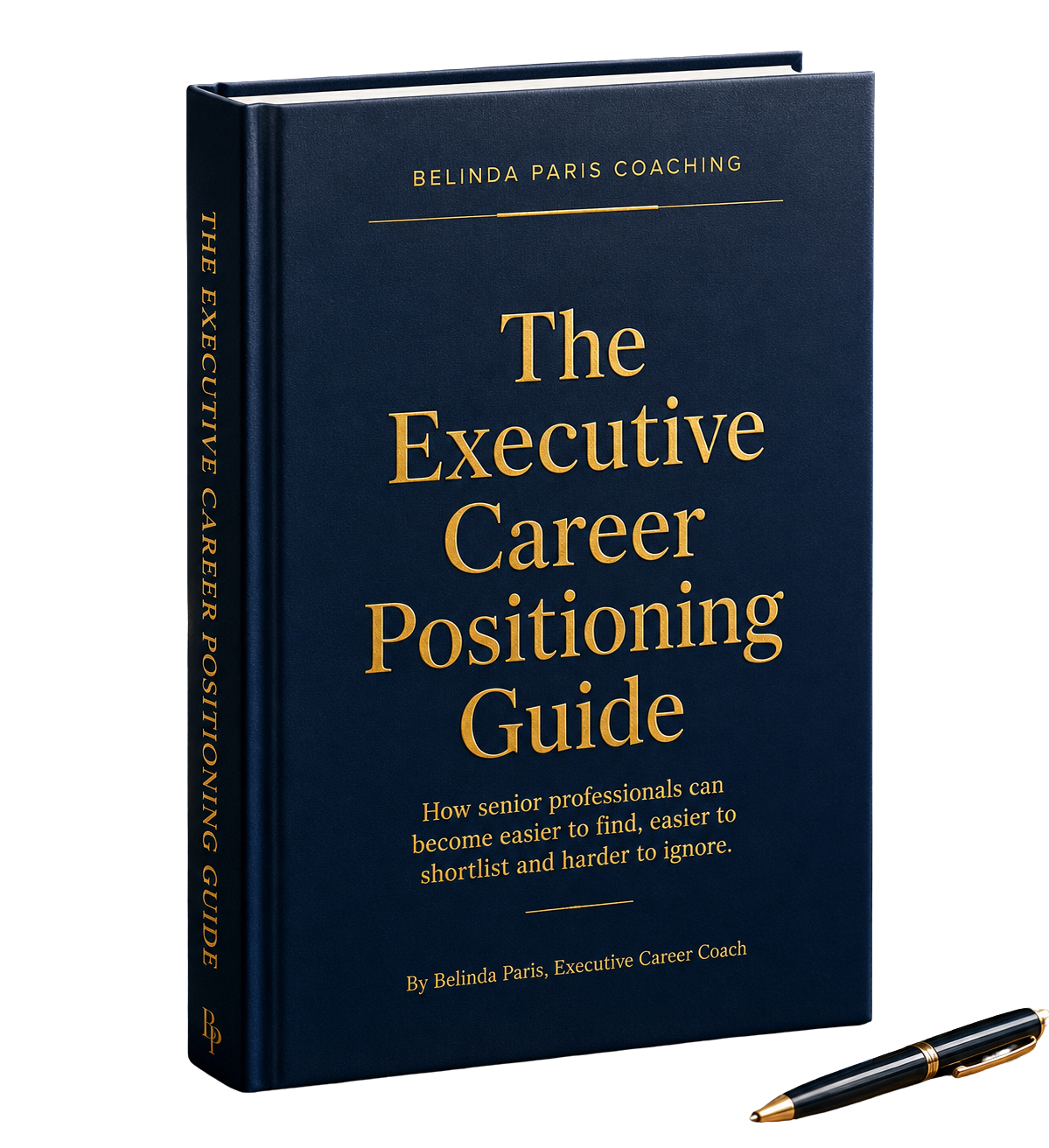
You've put in the work.
Now let's make sure the
world sees it.
Book your free clarity session today.
5,000+ resumes written.